


Air Cooled vs Water Cooled 2.2kW Spindle: Which One Should You Choose?
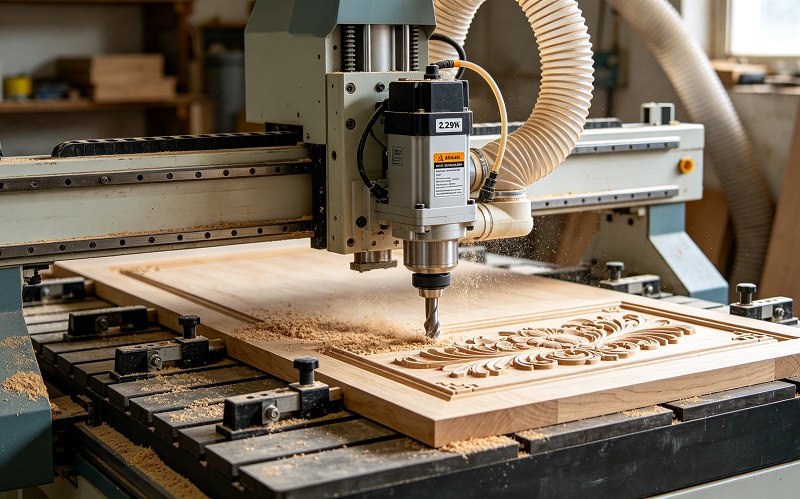
When you are ready to upgrade your CNC machine with a 2.2kW spindle, one of the most important decisions you will face is choosing between air cooling and water cooling. Both options deliver the same 2.2kW of cutting power, but they manage heat in very different ways — and that difference affects everything from noise levels to maintenance routines to the types of jobs you can run.
This guide breaks down the real-world differences between air cooled and water cooled 2.2kW spindles so you can choose the one that fits your workshop, your workflow, and your budget.
Key Takeaways
Air cooled 2.2kW spindles are simpler to install and maintain, with no external cooling system required.
Water cooled 2.2kW spindles run quieter and handle longer, continuous machining sessions with better thermal stability.
Noise, maintenance commitment, and job duration are the three factors that matter most when choosing between the two.
A quality 2.2kW spindle from an experienced manufacturer like WHD Spindle Motor ensures reliable performance in either configuration.
How Each Cooling Method Works
Understanding the basic mechanics helps clarify why the two types behave so differently in practice.
Air Cooled Spindles
An air cooled spindle removes heat using a built-in fan that pushes air across the motor housing and cooling surfaces. The fan is integrated into the spindle itself, so there is no external cooling loop to plumb or monitor. Installation is straightforward: mount the spindle, connect the VFD, set the electrical parameters, and keep the cooling openings unobstructed.
Water Cooled Spindles
A water cooled spindle circulates coolant through channels built into or around the housing. Heat transfers to the liquid, which then returns to a reservoir or chiller before circulating again. A basic setup includes a pump, reservoir, tubing, fittings, and coolant. More complete systems may add a radiator, flow indicator, and filter.
Side-by-Side Comparison: Air Cooled vs Water Cooled 2.2kW Spindle
The table below summarizes the key differences at a glance.
| Feature | Air Cooled 2.2kW Spindle | Water Cooled 2.2kW Spindle |
|---|---|---|
| Cooling Method | Built-in fan | Circulating coolant |
| Noise Level | Higher (continuous fan noise) | Lower (no spindle-mounted fan) |
| Continuous Power | Limited by heat buildup | Full rated power for long runs |
| Installation | Simple, no hoses or pump | More complex (pump, tank, hoses) |
| Maintenance | Minimal | Regular coolant checks and changes |
| Freeze Risk | None | Yes, in cold environments |
| Best For | Intermittent use, hobby, light production | Continuous production, quiet workshops |
Noise: The Most Noticeable Difference
If your CNC machine runs in a garage, basement, classroom, or shared studio, noise is often the deciding factor.
A water cooled 2.2kW spindle is significantly quieter at no load because it does not have a spindle-mounted cooling fan. The spindle itself produces very little noise — the remaining sound comes from the cutting process, the pump, and any dust collection system you use.
An air cooled 2.2kW spindle adds continuous fan noise whenever the spindle is running. The tone and volume vary by fan design and RPM, but the fan is always active. In a professional shop where other machines are running, this may not matter much. In a home workshop, it can be the difference between being able to work in the evening and not.
Bottom line: If noise matters in your environment, water cooling is the clear winner.
Thermal Stability and Continuous Duty
Heat management is where the two designs diverge most in practical terms.
Air cooled spindles rely on airflow to carry heat away. This works well for intermittent or light-duty machining, but under sustained, heavy cutting loads, an air cooled spindle reaches its practical operating limit sooner. The fan simply cannot remove heat as fast as a circulating liquid system can.
Water cooled spindles maintain stable temperatures even during long, continuous machining sessions. The coolant loop removes heat independently of spindle RPM, which means the spindle stays cool whether you are running at 8,000 RPM or 24,000 RPM. WHD's 2.2kW water cooled spindle, for example, maintains an extremely low temperature rise even during extended high-load operation at 24,000 RPM.
Bottom line: If you run multi-hour jobs or cut materials that generate significant heat, water cooling provides more headroom.
Installation and Maintenance: The Real-World Trade-Offs
Air Cooled: Simplicity Wins
An air cooled 2.2kW spindle is a self-contained unit. There is no pump to prime, no reservoir to fill, and no hoses to route. You mount the spindle, connect it to your VFD, and start machining. The only ongoing maintenance is keeping the cooling openings free of dust and checking that the fan spins correctly.
This simplicity is a genuine advantage for hobbyists, small studios, and anyone who wants to spend time machining rather than maintaining equipment.
Water Cooled: More Components, More Responsibility
A water cooled 2.2kW spindle requires you to manage a cooling loop. That means:
Using clean, purified water to prevent mineral buildup and corrosion
Changing the water periodically to keep the system clean
Adding antifreeze in winter if your workshop gets cold
Checking hoses and connections for leaks
Ensuring the pump is circulating properly — if water stops flowing, the spindle will overheat
None of this is complicated, but it is ongoing. The cooling loop is a maintenance commitment that air cooling simply does not ask for.
Bottom line: Air cooling is easier to live with day to day. Water cooling demands more attention but rewards you with better performance.
Performance and Cutting Capability
Both a 2.2kW air cooled spindle and a 2.2kW water cooled spindle deliver the same rated power. The difference is how long they can sustain that power under load.
WHD's 2.2kW air cooled spindle, for example, delivers 1.17 Nm of torque at 18,000 RPM and is well-suited for medium-to-light duty engraving, cutting acrylic and PVC, and light milling of soft metals like aluminum composite panels.
WHD's 2.2kW water cooled spindle delivers 0.8 Nm of torque at 24,000 RPM and is designed for high-efficiency wood engraving, deep routing, and precise finishing of materials like acrylic, PVC, and aluminum alloys. The stable temperature control allows it to maintain accuracy over long production runs.
Bottom line: Choose air cooling for intermittent work and simpler setups. Choose water cooling for continuous production and the highest surface finish quality.
Which One Should You Choose?
Choose an Air Cooled 2.2kW Spindle If:
You are a hobbyist or run a small studio
Your machining sessions are intermittent rather than continuous
You want the simplest possible installation and maintenance
Your workshop has good ventilation and noise is not a concern
You primarily work with wood, plastics, and light non-ferrous materials
Choose a Water Cooled 2.2kW Spindle If:
You run production jobs that last for hours
Your workshop is indoors or in a noise-sensitive location
You need consistent accuracy over long machining sessions
You are willing to manage a cooling loop as part of your routine
You want the best possible surface finish and thermal stability
Frequently Asked Questions (FAQ)
Q1: Is a water cooled 2.2kW spindle better than an air cooled one?
A: Not universally. Water cooling offers quieter operation and better continuous duty performance, while air cooling is simpler and easier to maintain. The right choice depends on your workload and environment.
Q2: How loud is an air cooled 2.2kW spindle?
A: Air cooled spindles produce noticeable fan noise whenever they run. The exact level varies by design and RPM, but it is consistently louder than a water cooled spindle at no load.
Q3: Can I run a water cooled 2.2kW spindle without coolant?
A: No. Running a water cooled spindle without adequate coolant flow will cause it to overheat and can damage the motor permanently.
Q4: What maintenance does a water cooled spindle need?
A: Use purified water, change it periodically, add antifreeze in winter, and check hoses and pump operation regularly.
Q5: Which type lasts longer?
A: With proper maintenance, both can last many years. Water cooled spindles maintain more stable temperatures, which can benefit long-term bearing life, but they also introduce additional failure points like pumps and leaks.
Q6: Can I cut aluminum with a 2.2kW spindle?
A: Yes. Both air cooled and water cooled 2.2kW spindles can handle light milling and trimming of aluminum with appropriate feed rates and tooling.
Q7: Do I need a VFD for a 2.2kW spindle?
A: Yes. Every high-frequency spindle requires a matching Variable Frequency Drive (VFD) to control speed. Ensure the VFD's power and frequency range match your spindle.
Conclusion: Choose the Right 2.2kW Spindle for Your Work
There is no single "best" cooling method for a 2.2kW spindle. The right choice depends on your machining habits, your workshop environment, and the maintenance you are willing to perform.
If you value simplicity and run intermittent jobs, an air cooled 2.2kW spindle is a reliable, cost-effective solution. If you need quiet operation, consistent thermal stability, and the ability to run long production sessions without derating, a water cooled 2.2kW spindle is the better investment.
WHD Spindle Motor has been manufacturing high-performance spindles for over 30 years. Our 2.2kW air cooled and water cooled spindle motors are engineered for precision, durability, and dependable performance across woodworking, advertising, and light metal machining applications. Whether you need the simplicity of air cooling or the thermal stability of water cooling, our technical team can help you select the right spindle for your machine and your work.
Ready to find the perfect 2.2kW spindle for your CNC setup? Contact WHD Spindle Motor today to discuss your requirements and request a quote.


